
.svg)


Designing Playgrounds for Mixed-Use Public Spaces
Council playgrounds are often located within parks, housing estates and shared public spaces. These environments must support a wide range of users, including children of different ages, families, carers and members of the wider community.
Designing playgrounds for mixed-use public spaces requires a careful balance between play value, inclusion, safety and long-term durability.
Understanding Mixed-Use Public Environments
Unlike school playgrounds, council play areas are used by:
- Children of varying ages
- Families and carers
- Community groups and visitors
- Residents using parks and open spaces
Playgrounds in these settings must integrate smoothly into the wider environment while remaining welcoming and safe for all users.
Designing for Shared Use and Inclusion
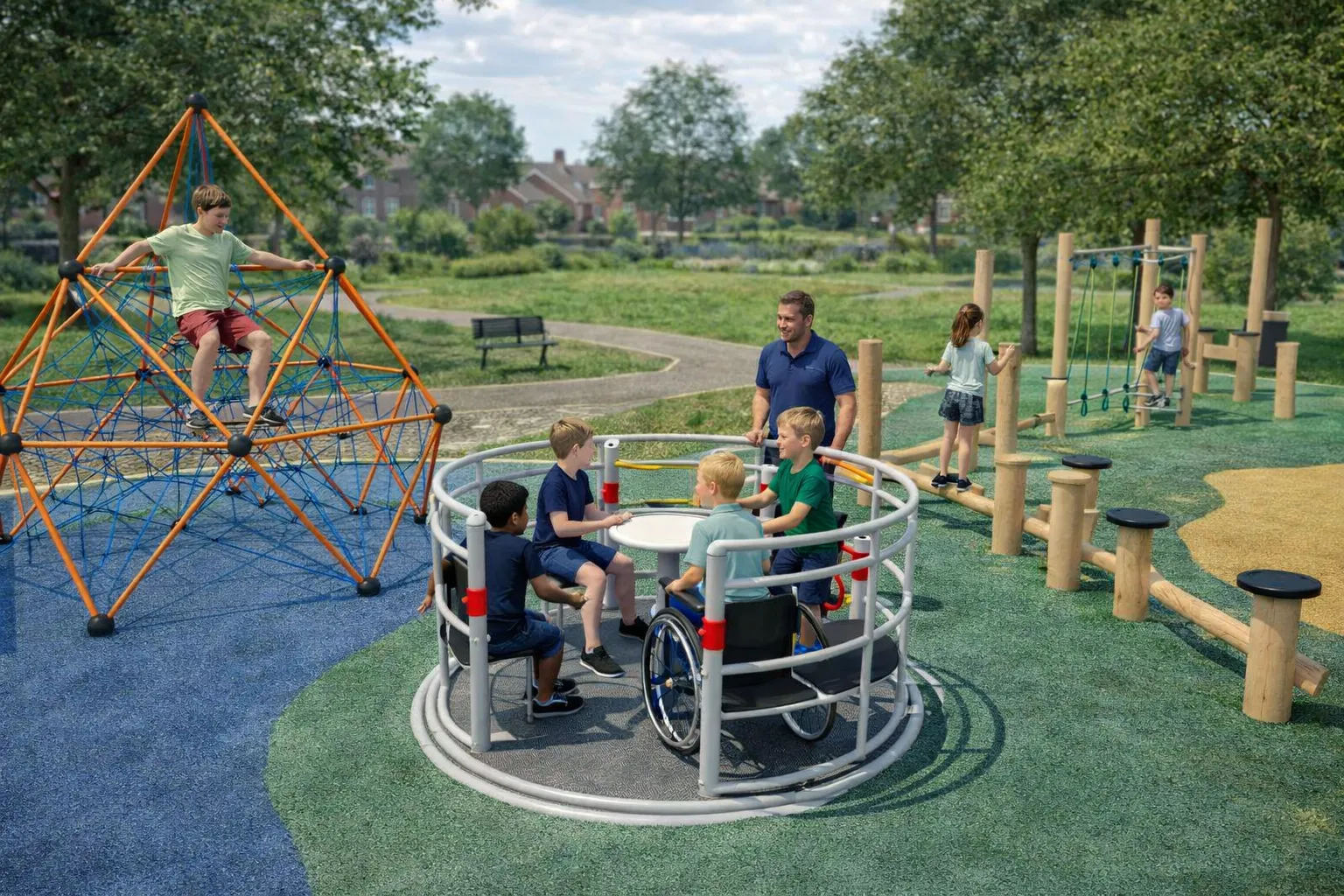
In mixed-use public spaces, inclusive design is essential. Playgrounds should encourage shared use rather than separating users by age or ability.
Inclusive mixed-use playgrounds typically include:
- Shared-use play equipment
- Ground-level and accessible play features
- Clear routes through play areas
- Equipment that supports group and social play
These features help playgrounds feel like natural gathering points within the community.
Councils planning inclusive public spaces may wish to explore Councils & Local Authority Playground Equipment (UK), where shared-use design is central to public play environments.
Managing Different Age Groups in One Space
One of the challenges of mixed-use playground design is supporting different age groups within the same area. Successful council playgrounds use layout and equipment choice to create natural progression rather than rigid separation.
This can include:
- Locating more active equipment centrally
- Using graduated challenge in climbing and balance equipment
- Providing calmer play areas at the edges
- Ensuring clear sightlines for supervision
This approach allows children to choose how they play while remaining part of the wider playground.
Integrating Playgrounds into Parks and Estates
Council playgrounds are rarely standalone features. They sit within parks, green spaces and housing developments, and should complement their surroundings.
Effective integration considers:
- Visual impact within the landscape
- Safe access routes from paths and entrances
- Durable surfacing suited to public environments
- Seating and space for carers and families
Well-integrated playgrounds enhance public spaces rather than dominating them.
Durability and Long-Term Value in Public Spaces
Mixed-use playgrounds experience high levels of footfall. Equipment must be selected for long-term performance with minimal maintenance.
Councils should prioritise:
- Robust materials suitable for public use
- Vandal-resistant design where required
- Equipment that remains relevant as communities change
- Layouts that support easy inspection and maintenance
This ensures playgrounds remain safe and welcoming over time.
Learning from School Playground Design Principles
Many principles used in school playground design also apply to mixed-use public spaces, particularly around layout, supervision and shared play.
Councils may find it helpful to reference School Playground Equipment (UK), where inclusive and shared-use equipment is widely used in busy, high-use environments.
Bringing Mixed-Use Playgrounds Together
Designing playgrounds for mixed-use public spaces requires a holistic approach. When inclusion, layout, durability and community use are considered together, council playgrounds become valued public assets rather than isolated installations.
Councils planning new or refurbished play areas are encouraged to explore Councils & Local Authority Playground Equipment (UK) to see how mixed-use playground design is delivered in real public settings.
Mixed-Use Playground Design for UK Councils
Mixed-use playground design helps UK councils create public play spaces that support children, families and communities together. By combining inclusive equipment, clear layouts and durable materials, councils can deliver playgrounds that work for shared public environments.


