
.svg)
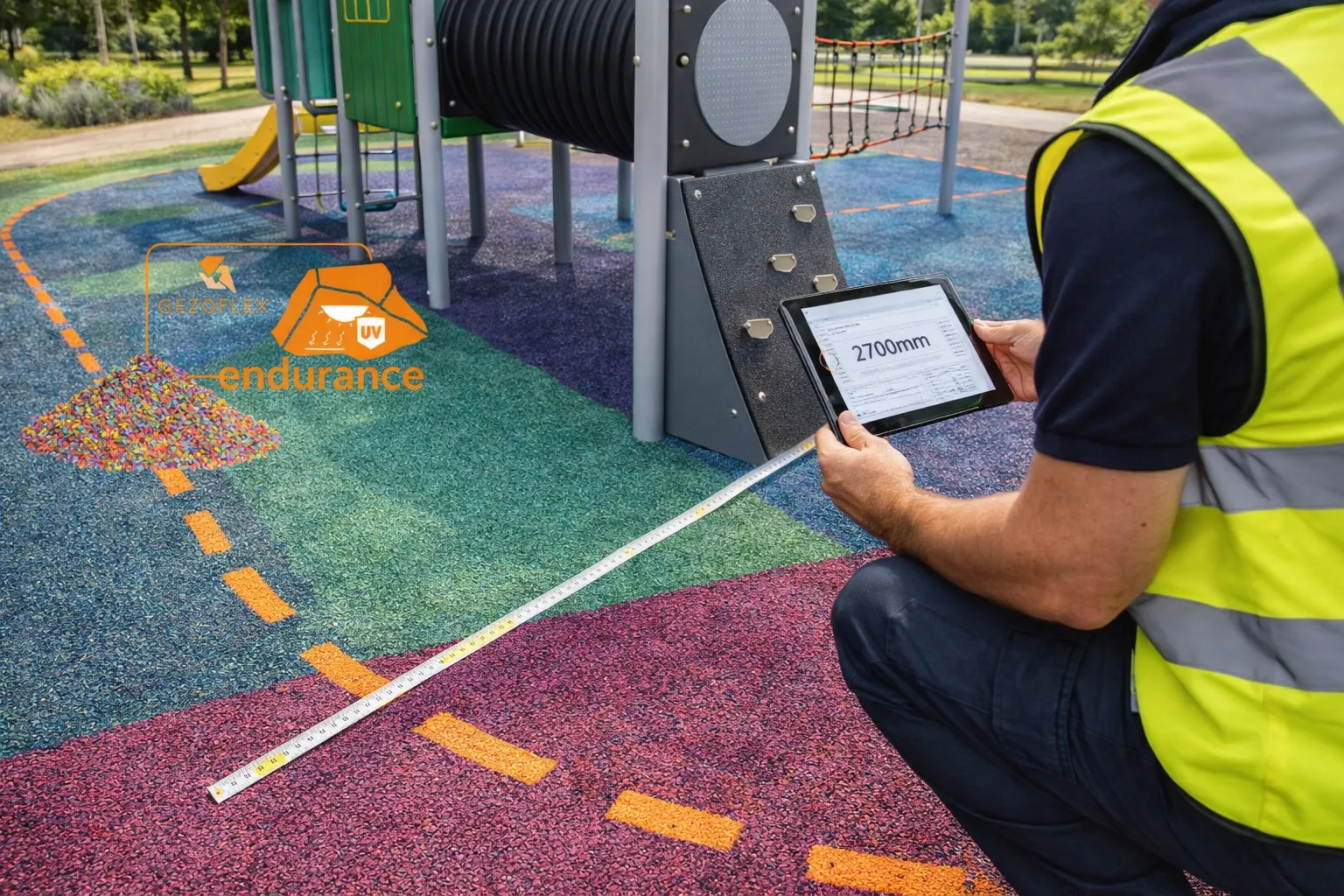


Safety and risk management are central to the design and delivery of outdoor play environments in public and shared spaces. From community parks and leisure destinations to housing developments and regeneration projects, professionally planned playground safety ensures children can play freely while risks are managed appropriately.
Modern playground design does not aim to eliminate risk entirely. Instead, it balances challenge with protection, allowing children to develop confidence, coordination and resilience within safe, compliant environments.
At Morti Sport & Play, we design and install outdoor play environments that meet strict safety and compliance requirements across the UK. This guide explains how safety, surfacing and risk management are addressed in public play spaces to deliver long-term, compliant and engaging playgrounds.
Understanding Playground Safety in Public Spaces
Public play environments differ significantly from school or private settings. These spaces are often:
- Open to the general public
- Used by mixed age groups
- Unsupervised for long periods
- Subject to heavy and unpredictable usage
- Exposed to weather, vandalism and wear
As a result, safety planning must consider not only equipment design, but also layout, surfacing, circulation, supervision and long-term maintenance.
For wider public environments, see Outdoor Play Equipment.
For council-managed projects, explore Councils & Local Authority Playground Equipment.
EN 1176 Playground Safety Standards
All professionally installed outdoor play equipment in the UK must comply with EN 1176 playground safety standards. These standards govern the design, manufacture, installation and inspection of playground equipment and surfacing.
Key EN 1176 principles include:
- Maximum fall heights and safety zones
- Minimum spacing between equipment
- Guarding and entrapment prevention
- Structural integrity and fixings
- Access and egress requirements
Compliance ensures play environments are safe, robust and suitable for public use.
Where accessibility is a primary requirement, designers may also explore Disability Playground Equipment and SEN & Inclusive Playground Equipment for inclusive compliance considerations.
Playground Surfacing & Fall Protection
Surfacing plays a critical role in managing impact risk within outdoor play environments. Appropriate surfacing must be selected based on:
- Equipment fall heights
- Usage levels
- Environmental conditions
- Maintenance requirements
- Visual integration with the landscape
Common surfacing systems include:
- Wetpour rubber surfacing
- Rubber tiles
- Bonded rubber mulch
- Engineered wood fibre and bark
- Grass matting systems
Each system offers different performance characteristics in terms of impact absorption, drainage, durability and maintenance.
For residential schemes, designers may find Playground Equipment for Housing Developments useful when planning estate-wide surfacing strategies.
Layout, Circulation & Supervision
Playground safety is influenced as much by layout as by equipment selection.
Effective safety planning considers:
- Clear circulation routes between zones
- Separation of high-speed and low-speed play
- Safe spacing between incompatible equipment types
- Clear sightlines for informal supervision
- Logical entry and exit points
Designing layouts that naturally guide movement reduces collision risk while supporting intuitive and enjoyable play.
For shared public environments, see Designing Outdoor Play Areas for Community Parks & Shared Spaces.
Risk Management & Risk–Benefit Assessment
Modern playground safety is based on risk–benefit assessment rather than risk elimination. This approach recognises the developmental value of challenge while managing unacceptable hazards.
Effective risk management includes:
- Identifying foreseeable hazards
- Assessing likelihood and severity
- Balancing challenge with protection
- Designing out hidden or structural risks
- Retaining appropriate levels of physical challenge
This approach supports adventurous, engaging play while maintaining compliance and public safety.
For challenge-based environments, see Adventure Playground Equipment for Public & Leisure Environments.
Inspection, Maintenance & Asset Management
Long-term safety depends on structured inspection and maintenance regimes.
Public play environments typically require:
- Routine visual inspections
- Operational inspections at set intervals
- Annual independent inspections
- Surface performance monitoring
- Timber and fixing integrity checks
Clear asset management planning ensures equipment remains safe, compliant and cost-effective throughout its lifecycle.
For estate-wide planning, designers may also explore Playground Equipment for Housing Developments.
Inclusive Safety Planning
Inclusive play environments introduce additional safety considerations to ensure accessibility does not compromise protection.
Inclusive safety planning typically includes:
- Step-free circulation and access routes
- Transfer-accessible play features
- Wider safety zones around shared-use equipment
- Sensory play features with appropriate guarding
- Clear visual contrast and orientation cues
For specialist inclusive design, explore:
Inclusive safety planning ensures shared play remains both accessible and fully compliant.
Why Safety Planning Matters
Well-planned playground safety delivers significant long-term benefits.
Effective safety planning:
- Protects children and users
- Reduces accident risk and liability
- Supports inspection and insurance requirements
- Extends equipment service life
- Builds trust with communities and stakeholders
By embedding safety into design from the outset, public play environments achieve higher usage, lower lifecycle costs and stronger community confidence.
Speak to Playground Safety Specialists
If you’re planning a public playground, leisure site or shared outdoor play environment, our team can provide expert guidance on safety planning, surfacing and compliance from early design through to installation.
We work across the UK to deliver safe, durable and fully compliant outdoor play environments.
Planning a public playground or outdoor play environment? Our team provides expert guidance on safety planning, surfacing systems and EN 1176 compliance across the UK.
Contact Morti Sport & Play to discuss your playground safety and surfacing requirements.
Further Guidance on Playground Safety & Compliance
Playground safety forms part of a wider framework of public space risk management, inclusive design standards and asset management planning.
For wider professional guidance, you may find these topics helpful:
- EN 1176 and playground inspection standards
- Risk–benefit assessment in public play
- Surfacing performance and lifecycle planning
Our related guides explore these themes in greater detail:
- Outdoor play equipment for public and community spaces
- Designing multi-age outdoor play environments
- Inclusive outdoor play equipment for shared environments
By combining compliant design, professional installation and long-term inspection planning, playgrounds can deliver safe and engaging play for decades.


