
.svg)
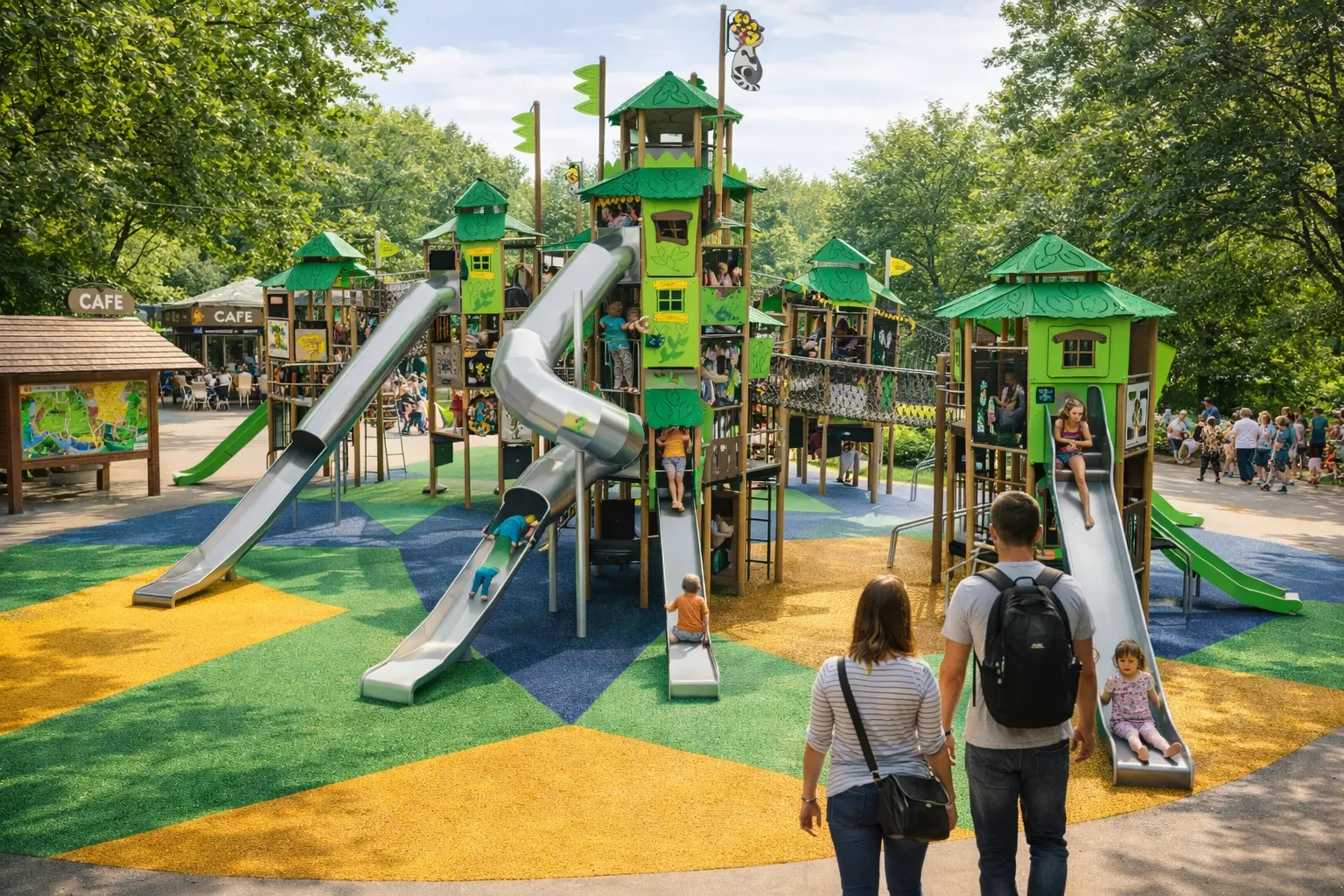


Outdoor play equipment plays a central role in shaping the visitor experience across leisure parks, attractions and visitor destinations. From holiday parks and family resorts to theme parks, zoos and heritage attractions, high-quality play provision helps attract families, extend dwell time and increase repeat visits.
Unlike school or community playgrounds, leisure environments operate within commercial frameworks where performance, durability and visual impact are critical. Play equipment must not only engage children but also support brand identity, visitor flow and long-term return on investment.
At Morti Sport & Play, we design and deliver outdoor play equipment for leisure parks, attractions and visitor destinations across the UK. This guide explains how professional play design supports commercial performance, visitor satisfaction and long-term asset value.
The Role of Play in Visitor Destinations
Play is no longer an optional extra in leisure environments. It has become a core feature of modern visitor destinations, particularly those targeting families.
Well-designed play environments:
- Attract families as primary visitors
- Encourage longer dwell times
- Increase food, retail and secondary spend
- Improve visitor satisfaction and reviews
- Support repeat visits and season passes
In many destinations, the playground becomes the visual and social heart of the site.
For wider shared environments, see Outdoor Play Equipment.
Where Leisure Play Equipment Is Commonly Installed
Outdoor play equipment is widely specified across a range of visitor and commercial environments, including:
- Holiday parks and family resorts
- Theme parks and adventure parks
- Zoos, wildlife parks and aquariums
- Visitor centres and heritage attractions
- Leisure centres and sports complexes
- Campsites and touring parks
In these settings, play environments must perform reliably under heavy seasonal use while remaining visually appealing and safe.
Where play forms part of mixed-use public environments, designers may also explore Commercial & Leisure Play Spaces.
Designing Play for Visitor Experience & Flow
Successful leisure playground design focuses on both play value and visitor movement.
Effective destination play environments typically include:
- Central landmark play structures
- Multiple entry and exit points
- Clear sightlines from cafés and seating areas
- Zoning by activity and intensity
- Integrated seating and social spaces
Positioning play near cafés, retail outlets and attractions naturally increases dwell time and secondary spend while supporting informal supervision.
Equipment Selection for High-Capacity Environments
Leisure environments require equipment capable of supporting high throughput, mixed ages and repeated daily use.
Common equipment types for visitor destinations include:
- Large multi-play towers and climbing structures
- Rope and net adventure systems
- Group swings and basket swings
- Inclusive roundabouts and spinners
- Slides and elevated routes
- Social play platforms and gathering zones
Combining high-capacity equipment with varied play types ensures engagement across age groups while maximising usage efficiency.
For high-challenge play, see Adventure Playground Equipment for Public & Leisure Environments.
Inclusive Play in Leisure Environments
Inclusive play is increasingly expected within visitor destinations. Families expect children of different abilities to be able to play together within the same environment.
Inclusive leisure play environments often include:
- Ground-level and step-free access routes
- Shared-use inclusive equipment
- Transfer-accessible climbing features
- Sensory play elements
- Social and cooperative play zones
For specialist inclusive provision, explore:
Inclusive play not only improves access but also broadens your visitor market and strengthens destination reputation.
Durability, Maintenance & Lifecycle Performance
Leisure playgrounds operate under demanding conditions, often with:
- High daily footfall
- Seasonal peak loads
- Extended opening hours
- Limited downtime for maintenance
As a result, equipment selection and specification must prioritise:
- Robust materials and construction
- Vandal-resistant detailing where required
- Long service life and low maintenance
- Clear inspection and servicing regimes
Whole-life value is a critical factor in commercial playground investment.
For estate-wide planning, designers may also explore Playground Equipment for Housing Developments.
Safety, Compliance & Risk Management
Leisure play environments must meet the same rigorous safety standards as public playgrounds while supporting higher movement and throughput.
Key considerations include:
- EN 1176 compliance across all equipment
- Clear circulation routes and spacing
- Appropriate safety surfacing systems
- Logical zoning between high-speed and low-speed play
- Structured inspection and maintenance planning
For detailed safety guidance, see Outdoor Play Safety, Surfacing & Risk Management in Public Spaces.
Why Play Adds Commercial Value
High-quality outdoor play environments deliver direct commercial benefits for visitor destinations.
Well-designed leisure playgrounds:
- Increase family appeal and ticket sales
- Extend dwell time and on-site spending
- Improve customer satisfaction and reviews
- Support brand identity and destination positioning
- Drive repeat visits and long-term loyalty
By investing in professionally designed play environments, leisure operators enhance both visitor experience and long-term financial performance.
Speak to Leisure Playground Specialists
If you’re planning a playground for a holiday park, attraction or visitor destination, our team can provide expert guidance from concept through to installation.
We work across the UK to deliver high-capacity, durable and visually striking leisure play environments.
Contact Morti Sport & Play to discuss your leisure playground project.
Further Guidance on Leisure Play Design
Play forms an increasingly important part of destination planning, placemaking and visitor experience design. National tourism strategies now recognise the role of family play in supporting regional tourism and leisure economies.
For related guidance, you may find these topics helpful:
- Designing family-friendly visitor destinations
- Playground design for high-footfall environments
- Lifecycle planning for commercial play assets
Our related guides explore these themes in greater detail:
- Outdoor play equipment for communities and public spaces
- Adventure playground equipment for leisure environments
- Natural outdoor play equipment for parks and attractions
By combining high play value, inclusive design and durable specification, leisure playgrounds can deliver exceptional visitor experience and long-term commercial value.


